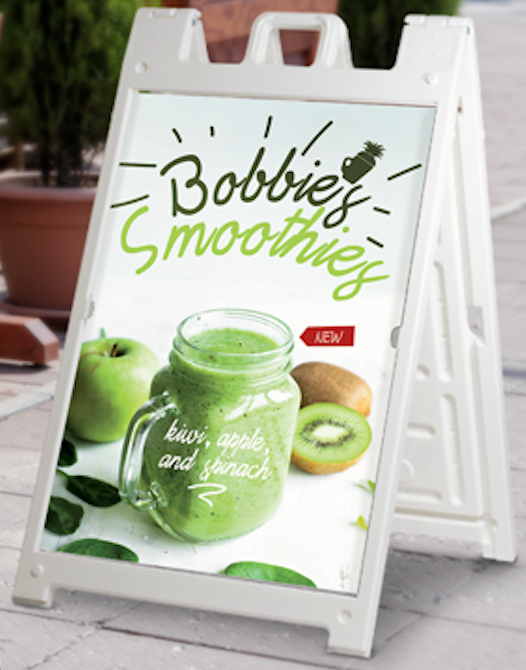
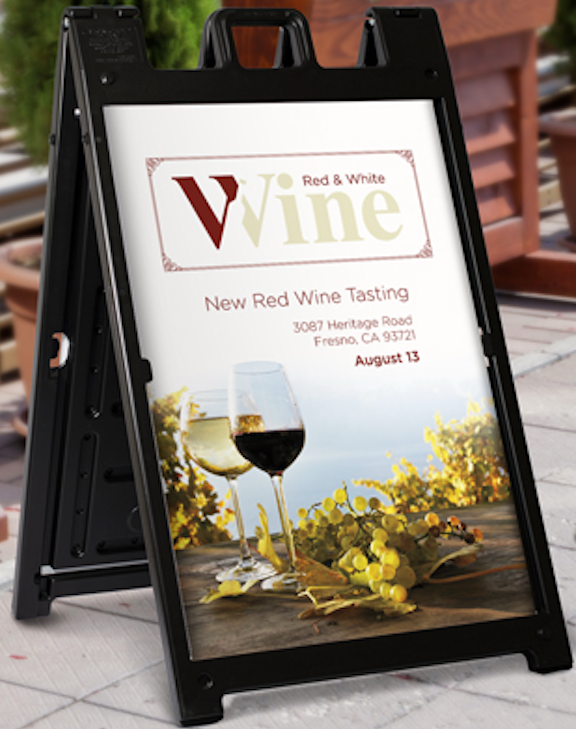
A-Frame signs, also known as sidewalk signs or sandwich boards, are one of the most versatile and effective forms of outdoor advertising. Designed to be placed on sidewalks, walkways, entrances, and high-traffic areas, A-Frame signs help businesses capture attention exactly where customers make decisions.
Beyond the Sidewalk
While A-Frame signs are commonly used outside storefronts, creative businesses have discovered countless ways to maximize their impact.
Create a Photo Opportunity
Design a sign with a fun message, hashtag, or branded backdrop location that encourages visitors to take photos and share them on social media.
Event Navigation
Use multiple A-Frames throughout large venues, campuses, festivals, or conferences to guide attendees to registration areas, meeting rooms, parking, or attractions.
Interactive Messaging
Restaurants and coffee shops often use chalkboard A-Frames to post daily specials, trivia questions, inspirational quotes, or customer polls that encourage engagement.
Real Estate Tours
Guide visitors from major roads to open houses with a series of directional A-Frame signs that create a clear path to the property.
Seasonal Promotions
Swap graphics throughout the year to promote holiday sales, seasonal menus, grand openings, or community events without investing in permanent signage.
Employee Recruitment
Place hiring messages outside your business where local job seekers are most likely to see them.
Drive Foot Traffic from Parking Areas
Position signs near parking lots or nearby intersections to direct potential customers toward your entrance and highlight special offers.
Community Information Stations
Schools, churches, nonprofits, and community organizations can use A-Frame signs to communicate schedules, events, and important announcements.
The concept behind the A-Frame sign dates back centuries. Merchants have long used portable signs outside their businesses to attract passersby and communicate products, services, and special offers.
Early versions were often handcrafted from wood and painted by local sign makers. Shopkeepers would place them outside inns, markets, bakeries, and general stores to identify their businesses in an era when many customers could not read and relied on symbols and illustrations.
As cities grew and pedestrian traffic increased, portable sidewalk advertising became an important tool for local commerce. By the late 19th and early 20th centuries, sandwich boards became a common sight in commercial districts around the world.
Modern A-Frame signs evolved with the introduction of durable plastics, aluminum frames, weather-resistant graphics, and replaceable inserts. These advancements made them lighter, longer-lasting, and easier to update for changing promotions.
Today, A-Frame signs remain one of the most effective forms of local advertising because they engage customers at the point where purchasing decisions are often made—just steps away from your business.